Sergey Petrosyan Sergey Petrosyan

Visual Attention Exercises You Can Do Daily

Visual attention is a cognitive skill that affects how efficiently you process the world around you. It helps you notice relevant details, detect patterns, and ignore distractions.

Although we rely on visual attention constantly, most people never train it intentionally.

The good news is that improving visual attention does not require complicated systems or long training sessions. A few minutes of focused exercises each day can stimulate the brain and strengthen important cognitive abilities.

Below are several simple visual attention exercises that can be practiced daily.

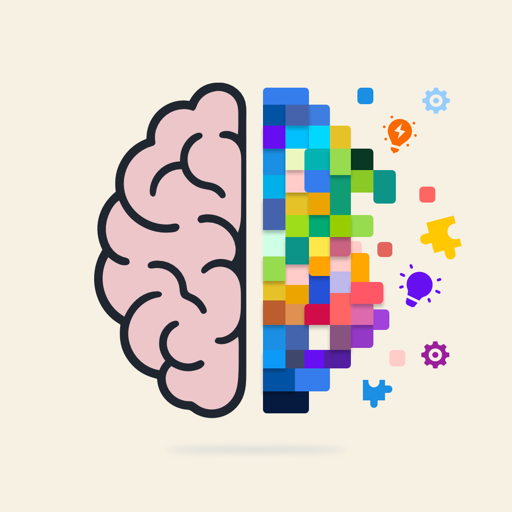
Illustration representing daily visual attention exercises and pattern recognition training

Visual Attention Exercises You Can Do Daily

Visual attention is a cognitive skill that affects how efficiently you process the world around you.

Visual attention is a cognitive skill that affects how efficiently you process the world around you. It helps you notice relevant details, detect patterns, and ignore distractions.

Although we rely on visual attention constantly, most people never train it intentionally.

The good news is that improving visual attention does not require complicated systems or long training sessions. A few minutes of focused exercises each day can stimulate the brain and strengthen important cognitive abilities.

Below are several simple visual attention exercises that can be practiced daily.

1. Timed Visual Search

Visual search tasks involve scanning an image and locating specific elements as quickly as possible.

For example:

  • Find all circular objects in a complex picture

  • Identify specific colors among many shapes

  • Locate repeating symbols

This type of exercise trains:

  • selective attention

  • scanning efficiency

  • mental filtering

Timed challenges add an additional cognitive component by encouraging faster processing.

2. Pattern Rearrangement

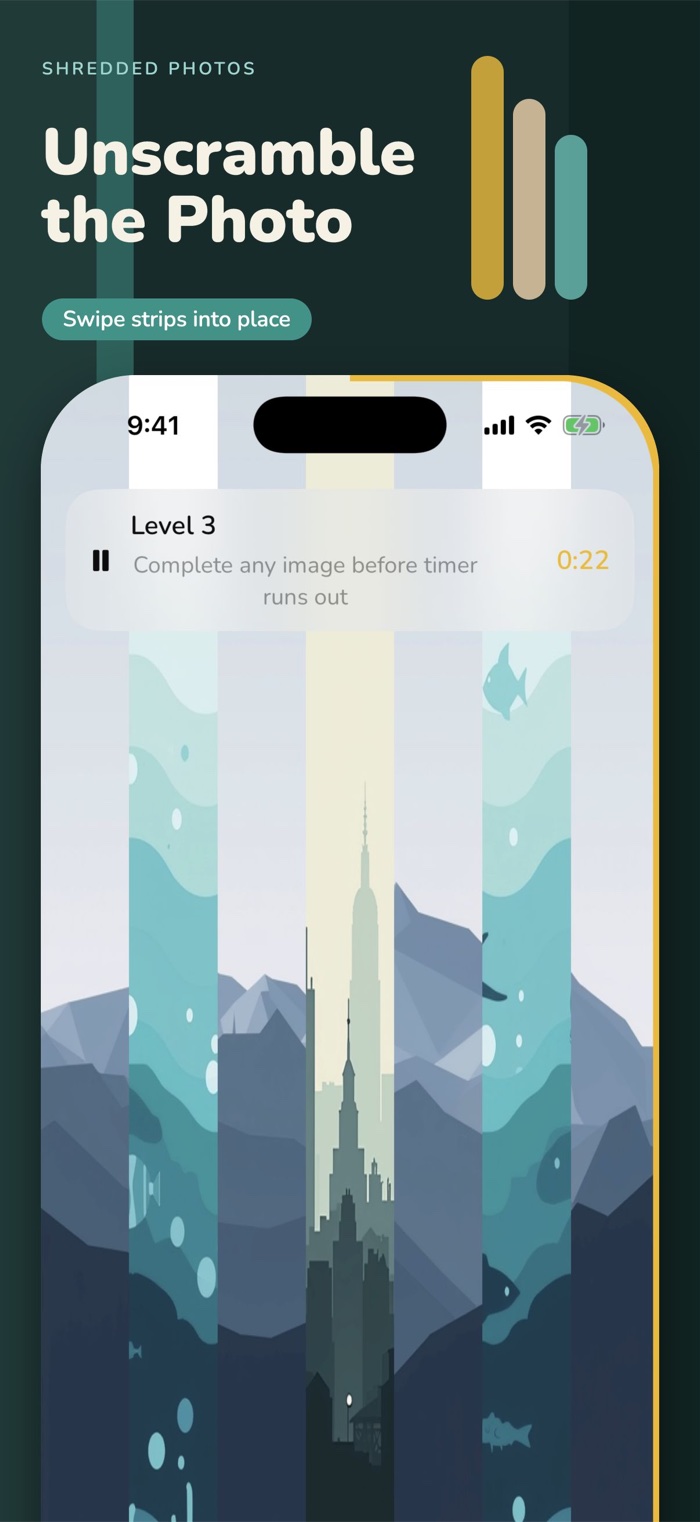
Pattern rearrangement exercises require you to organize scattered elements into a meaningful structure.

This might involve:

  • reconstructing a fragmented image

  • aligning pieces into a coherent pattern

  • restoring order from visual chaos

These activities stimulate several cognitive systems simultaneously, including spatial reasoning and pattern recognition.

Many visual puzzle games use this principle to create engaging cognitive challenges.

3. Spot-the-Difference Challenges

Comparing two nearly identical images and detecting small differences is another effective attention exercise.

This activity strengthens:

  • detail recognition

  • sustained focus

  • visual discrimination

Even short sessions can train the brain to notice subtle changes more efficiently.

4. Rapid Pattern Recognition

Another useful exercise involves identifying patterns as quickly as possible.

For instance, you can look at a grid of shapes and try to recognize repeating sequences or hidden structures.

This type of training helps the brain organize visual information more effectively.

Pattern recognition is closely related to visual attention, because the brain must first filter noise before detecting structure.

5. Short Daily Sessions

Consistency is far more important than intensity.

Instead of occasional long sessions, short daily exercises are more effective for cognitive stimulation.

A simple structure might look like this:

  • 5–10 minutes per session

  • minimal distractions

  • gradually increasing difficulty

Regular exposure to visual challenges encourages the brain to maintain sharper focus over time.

Using Structured Visual Puzzles

One of the easiest ways to practice visual attention consistently is through structured puzzle environments.

Visual puzzle apps often combine several attention-training principles, such as:

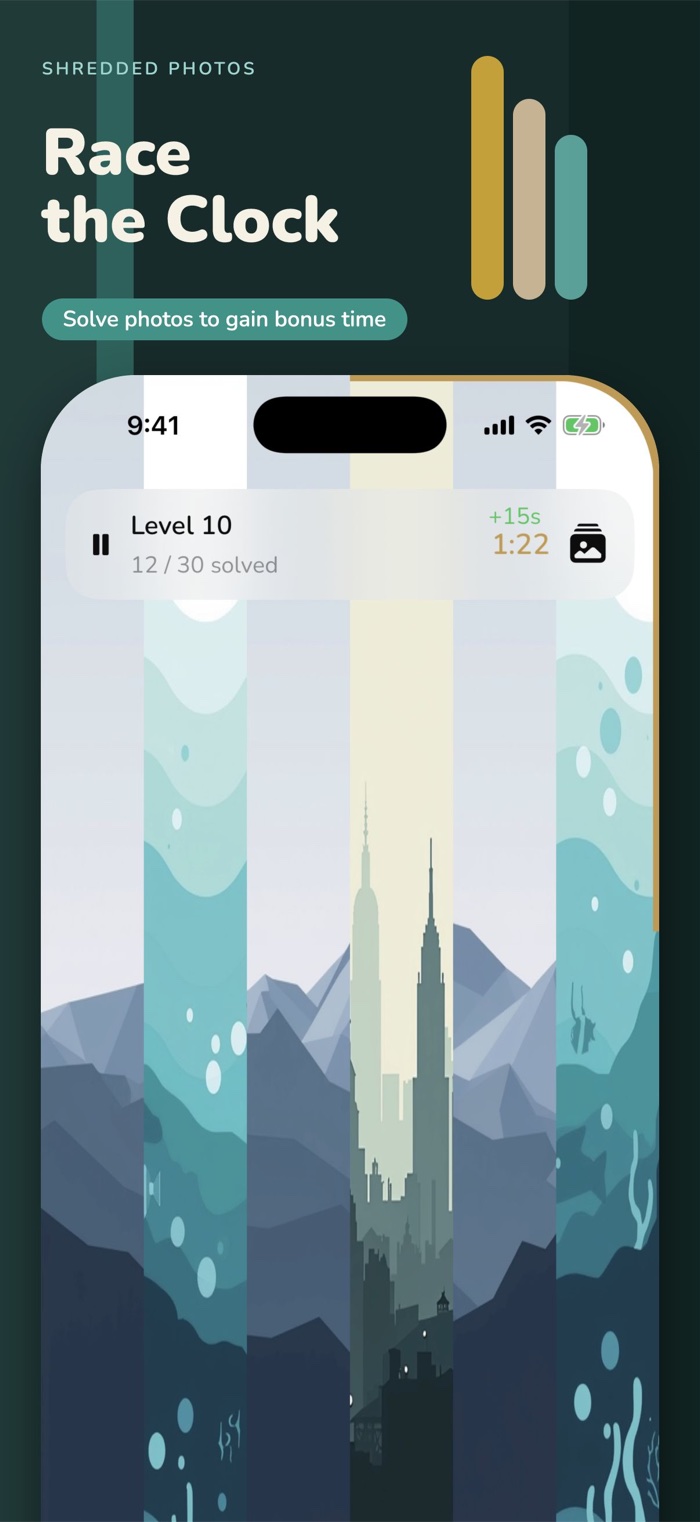
  • timed tasks

  • pattern rearrangement

  • progressive difficulty

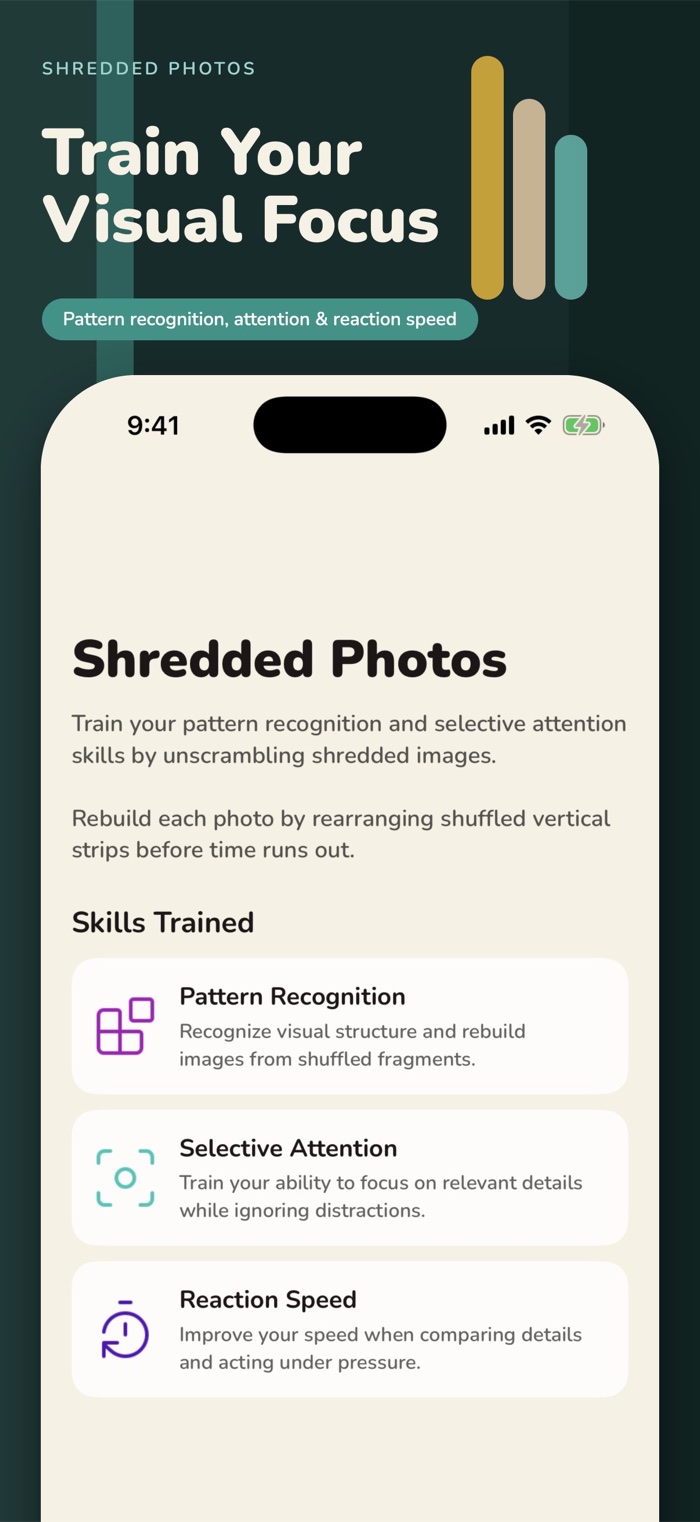
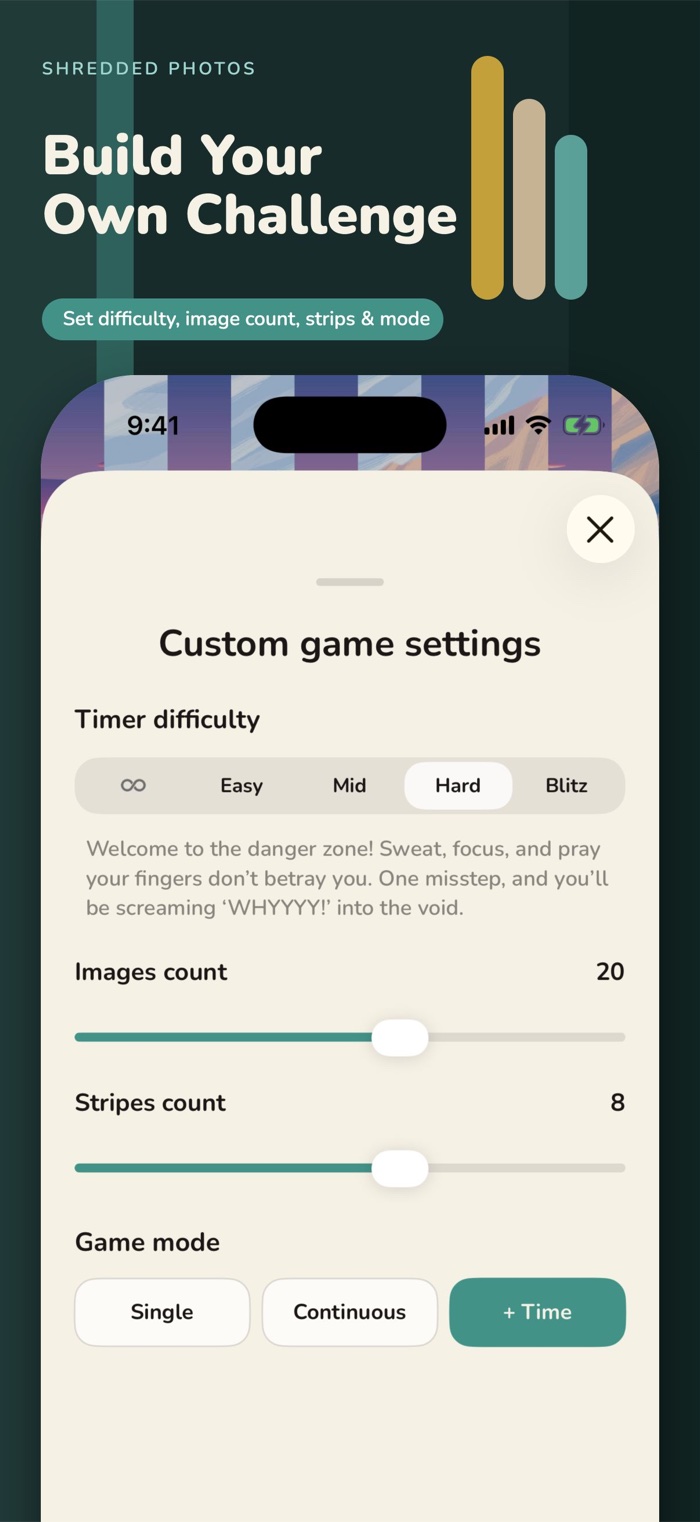
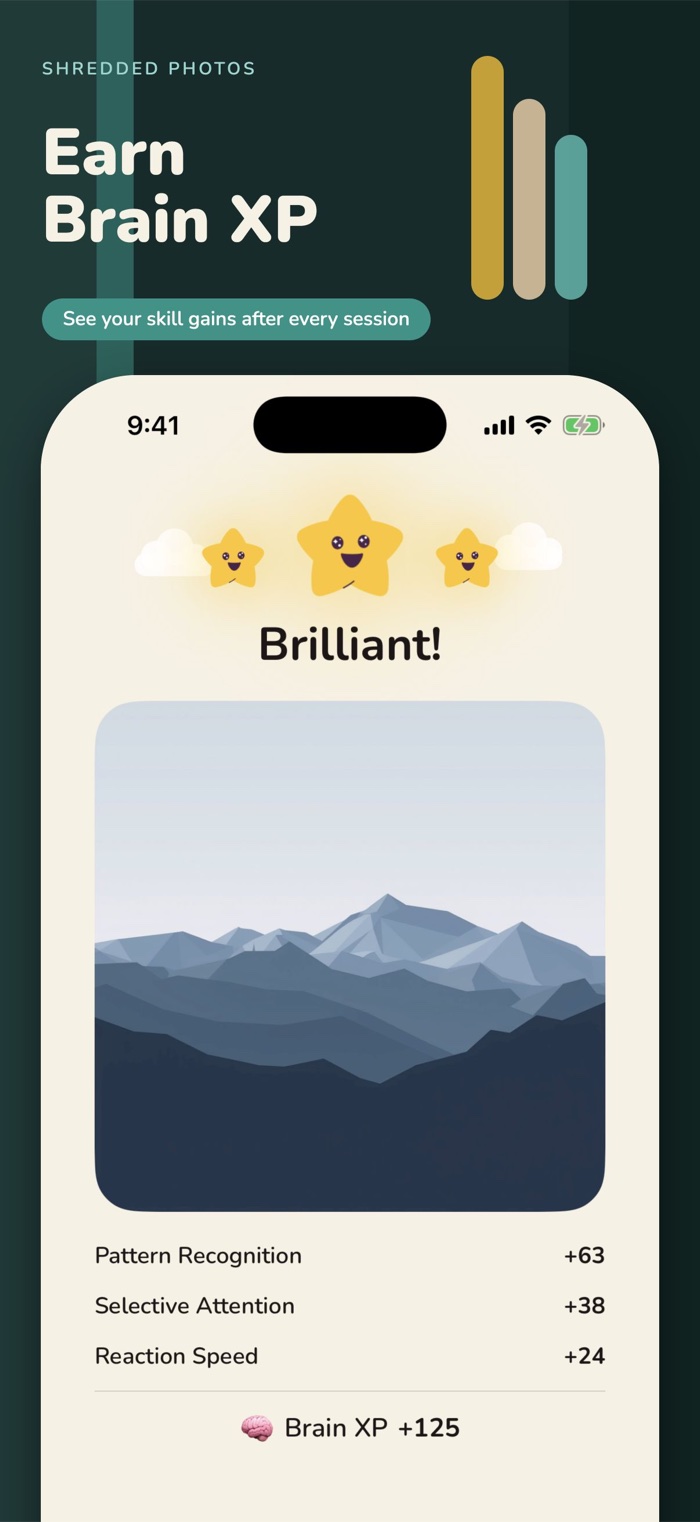
For example, PixPuzz uses swipe-based image puzzles designed to stimulate visual attention and pattern recognition in short sessions.

The focus is not on endless gameplay, but on concentrated visual engagement.

Final Thoughts

Visual attention can be strengthened through regular practice.

Simple exercises such as visual search, pattern reconstruction, and difference detection encourage the brain to process visual information more efficiently.

Just a few minutes of focused visual activity each day can gradually sharpen attention, improve pattern recognition, and make it easier to process complex visual environments.

Read More
Sergey Petrosyan Sergey Petrosyan

How Visual Puzzles Improve Focus and Pattern Recognition

In a world full of notifications, short videos, and endless scrolling, maintaining focus has become increasingly difficult. Many people are now looking for simple, effective ways to sharpen their attention and train their brain without spending hours on complex programs.

One surprisingly powerful method? Visual puzzles.

But how exactly do visual puzzles improve focus and pattern recognition? Let’s break it down.

In a world full of notifications, short videos, and endless scrolling, maintaining focus has become increasingly difficult. Many people are now looking for simple, effective ways to sharpen their attention and train their brain without spending hours on complex programs.

One surprisingly powerful method? Visual puzzles.

But how exactly do visual puzzles improve focus and pattern recognition? Let’s break it down.


What Is Visual Attention?

Visual attention is your brain’s ability to selectively concentrate on relevant visual information while ignoring distractions.

Every time you:

• search for an object in a messy room,

• notice small differences between two images,

• rearrange visual elements to make sense of a pattern, you are training this system.

Unlike passive content consumption, visual puzzles force the brain into active processing mode.


Pattern Recognition: The Brain’s Hidden Superpower

Pattern recognition is the ability to detect structure, repetition, and relationships in visual information.

It plays a role in:

• reading

• driving

• problem-solving

• learning new skills

• decision-making

When you engage with visual puzzles that require rearranging, aligning, or reorganizing elements, your brain repeatedly activates neural pathways responsible for detecting order within chaos.

Over time, this strengthens cognitive speed and visual processing efficiency.


Why Short, Timed Challenges Work So Well

Research in cognitive psychology suggests that short, focused bursts of mental effort can be more effective than long, unfocused sessions.

Timed visual challenges:

• increase alertness

• activate working memory

• stimulate fast decision-making

• reduce mental passivity

The key is intensity combined with clarity.


A well-designed visual puzzle provides:

1. A clear goal

2. Immediate feedback

3. A sense of progression

This loop reinforces motivation while training attention.


Visual Puzzles vs. Traditional Brain Training

Many “brain training games” rely on math drills or word tasks. While useful, they don’t always engage visual processing deeply.

Visual-based challenges are different because they:

• require spatial organization

• demand rapid scanning

• activate pattern completion mechanisms

• encourage perceptual flexibility

For people who prefer visual thinking, this format feels more natural and less exhausting.


Can Visual Puzzles Actually Improve Focus?

Consistent engagement with structured visual tasks can:

• improve sustained attention

• enhance visual discrimination

• increase processing speed

• reduce distractibility over time

The effect isn’t magic — it’s repetition and neural adaptation.

Like physical muscles, cognitive systems respond to structured, repeated stimulation.


A Simple Way to Start

If you want to train visual attention:

• Choose short daily sessions (5–10 minutes)

• Focus on accuracy before speed

• Gradually increase difficulty

• Avoid multitasking while playing

Even small, consistent cognitive workouts can accumulate over time.

Some modern apps focus specifically on visual-based challenges rather than generic brain drills. For example, PixPuzz uses real image-based rearrangement puzzles designed to stimulate pattern recognition and visual focus through fast, swipe-based interaction.

The goal isn’t just entertainment — it’s active engagement of visual cognition.


Final Thoughts

Improving focus doesn’t always require complex programs or long study sessions.

Sometimes, structured visual challenges are enough to:

• activate your brain

• sharpen perception

• and strengthen attention control

The key is consistency and choosing the right type of cognitive stimulation.

Visual puzzles may look simple — but under the surface, your brain is working harder than you think.

Read More
Sergey Petrosyan Sergey Petrosyan

Why Your Wallpaper Choice Affects Your Mood

Did you know that the wallpaper on your smartphone can influence your mood and productivity? The images we see daily, even on our device screens, can have a profound psychological impact. Choosing the right wallpaper can help create a positive environment, boost your creativity, and even reduce stress.

Did you know that the wallpaper on your smartphone can influence your mood and productivity? The images we see daily, even on our device screens, can have a profound psychological impact. Choosing the right wallpaper can help create a positive environment, boost your creativity, and even reduce stress.

For instance, calming nature scenes like sunsets or forests promote relaxation and focus, while vibrant and colorful patterns can energize and uplift your spirits. Minimalist designs can help reduce distractions, making them perfect for those who value simplicity and clarity in their daily routine. On the other hand, personalized wallpapers, such as completed photo puzzles from games like PixPuzz, add a touch of individuality and accomplishment to your screen.

With PixPuzz, you can solve beautiful photo puzzles and save them as high-quality wallpapers, including 4K options. This unique feature lets you design your phone’s look while enjoying the satisfaction of completing a challenging puzzle. Whether you want a minimalist aesthetic, a burst of vibrant color, or a serene landscape, the perfect wallpaper is just a puzzle away.

Start boosting your mood today by playing PixPuzz and creating wallpapers that inspire you every time you unlock your phone!

Read More
Sergey Petrosyan Sergey Petrosyan

Common Mistakes When Playing Photo Puzzles and How to Avoid Them

Playing photo puzzles is a fun and rewarding activity, but even the most experienced players can make mistakes that slow them down or make puzzles feel more challenging. Here are the most common mistakes when solving photo puzzles and tips to avoid them:

Playing photo puzzles is a fun and rewarding activity, but even the most experienced players can make mistakes that slow them down or make puzzles feel more challenging. Here are the most common mistakes when solving photo puzzles and tips to avoid them:

1. Not Sorting Puzzle Pieces First: Jumping straight into solving without grouping pieces by color or edge types can waste time. Start by organizing pieces to make the process smoother.

2. Forgetting the Big Picture: Focusing on small details without considering the overall image can lead to misplaced pieces. Keep the full picture in mind for better accuracy.

3. Skipping the Borders: Skipping the edges is one of the biggest mistakes. Assembling the border first gives structure and makes solving the puzzle easier.

4. Working Without a Reference: Not using the completed image as a guide can result in unnecessary trial and error. Always keep the reference image handy.

5. Rushing Through the Puzzle: Speeding up often leads to errors. Take your time and enjoy the process for better results.

Avoiding these mistakes can save you time and make solving puzzles more enjoyable. With PixPuzz, you can practice these tips while exploring a variety of photo puzzles designed for players of all skill levels. Plus, once you’ve completed a puzzle, you can save it as a 4K smartphone wallpaper to personalize your device.

Ready to improve your skills and avoid common pitfalls? Download PixPuzz today and enjoy solving puzzles the right way!

Read More
Sergey Petrosyan Sergey Petrosyan

Tips for Solving Photo Puzzles Faster

Do you want to solve photo puzzles faster and improve your skills? With these simple tips, you’ll become a master of photo puzzle games like PixPuzz in no time! Photo puzzles challenge your problem-solving abilities, concentration, and spatial awareness. By following the right strategies, you can enhance your speed and enjoy the process even more.

Do you want to solve photo puzzles faster and improve your skills? With these simple tips, you’ll become a master of photo puzzle games like PixPuzz in no time! Photo puzzles challenge your problem-solving abilities, concentration, and spatial awareness. By following the right strategies, you can enhance your speed and enjoy the process even more.

1. Start with the Edges: Begin by assembling the border pieces of the puzzle to create a framework. This step makes it easier to visualize the final picture.

2. Sort by Colors and Patterns: Group similar pieces together based on colors or patterns to quickly identify where they belong.

3. Work on Small Sections: Focus on one part of the image at a time rather than the entire puzzle, which helps you avoid feeling overwhelmed.

4. Use Reference Images: Refer to the completed picture if available, so you can match pieces more effectively.

5. Practice Regularly: The more puzzles you solve, the better and faster you’ll get!

With these tips, you’ll not only solve puzzles faster but also have more fun while playing. In PixPuzz, you can practice these strategies while enjoying a wide range of photo puzzles. Once completed, you can even save your favorite puzzles as 4K smartphone wallpapers to personalize your device.

Ready to test your skills?

Download PixPuzz today and challenge yourself with beautiful photo puzzles that improve your brain power and reaction time!

Read More
Sergey Petrosyan Sergey Petrosyan

How Photo Puzzle Games Can Boost Your Brain Power

Discover how photo puzzle games like PixPuzz can improve your cognitive abilities while providing hours of fun. Photo puzzles are more than just a source of entertainment — they challenge your brain in ways that can enhance problem-solving skills, memory, and reaction time. By solving intricate puzzles, you stimulate critical thinking and concentration, which are essential for mental agility.

Discover how photo puzzle games like PixPuzz can improve your cognitive abilities while providing hours of fun. Photo puzzles are more than just a source of entertainment — they challenge your brain in ways that can enhance problem-solving skills, memory, and reaction time. By solving intricate puzzles, you stimulate critical thinking and concentration, which are essential for mental agility.

Studies show that playing puzzle games regularly can help reduce stress and boost brain power. Games that involve visual problem-solving, like arranging photo puzzles, also enhance spatial awareness and creativity. Whether you’re matching pieces or racing against time, each puzzle hones your focus and decision-making abilities.

With PixPuzz, you can take this experience to the next level. Not only do you get to enjoy solving stunning photo puzzles, but you can also turn your completed puzzles into aesthetic smartphone wallpapers. Choose from a variety of images, adjust the resolution and personalize your phone screen while keeping your brain sharp.

Ready to enhance your mental fitness?

Download PixPuzz today and start exploring the endless benefits of photo puzzle games for your mind!

Read More