
Photo puzzles are not solved by moving faster at random. The quickest improvement usually comes from removing decisions that have little evidence behind them.
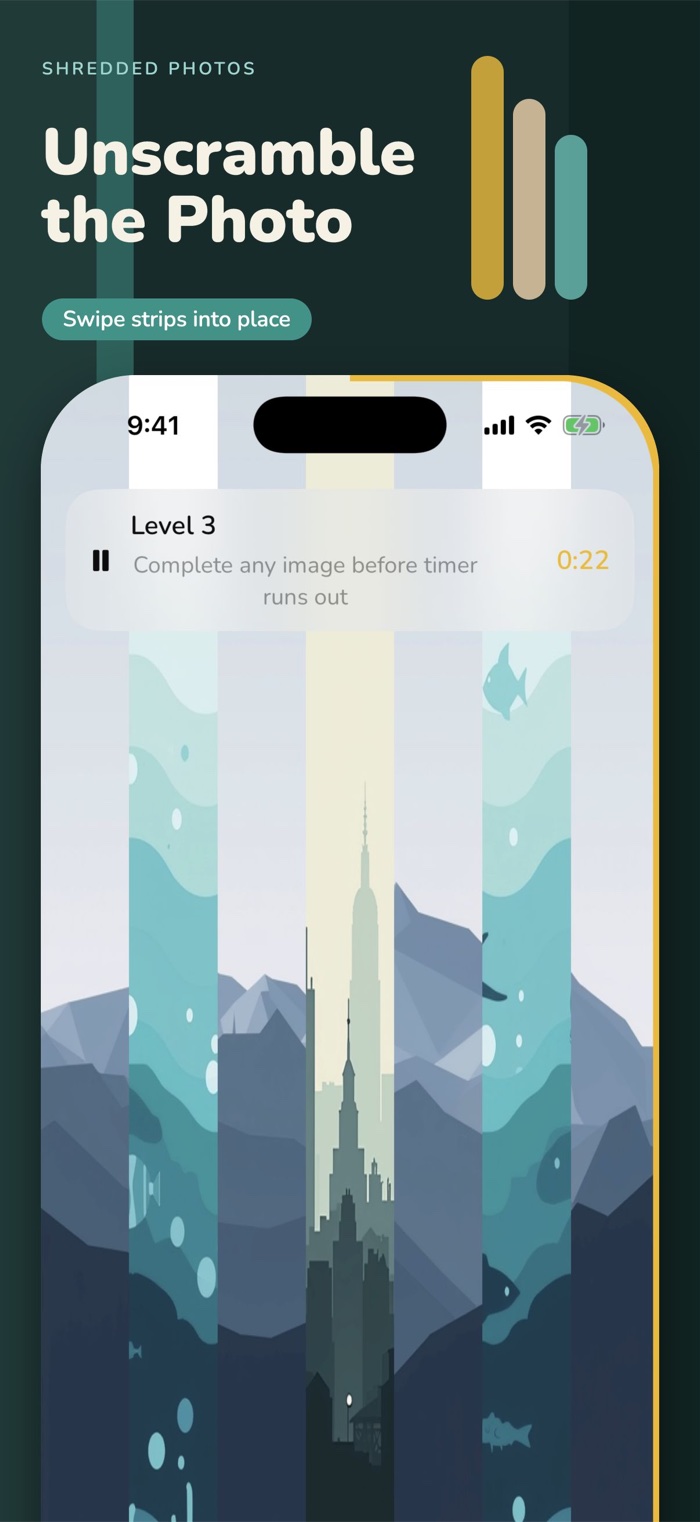
PixPuzz uses image strips rather than traditional cardboard pieces, so the useful cues are continuity, composition, color, texture, and the expected position of major objects.
Mistake 1: moving before you have a reason
A random swap may occasionally work, but it gives you little information when it fails. Before moving a strip, name the cue: a line continues, a gradient matches, or two halves of an object align.
If you cannot state the reason, compare another candidate first.
Mistake 2: trusting one matching color
Large areas of sky, water, foliage, or wall can share nearly identical colors. A strong match preserves several cues at the boundary.
- A line crosses the edge at the same height.
- Texture scale and lighting remain consistent.
- Perspective lines point in a plausible direction.
- The pair fits the composition of the full image.
Mistake 3: staring at one difficult section
When one pair is ambiguous, stop forcing it. Solve a more distinctive region and return after the number of open positions has decreased.
Progress elsewhere changes the problem: a difficult strip may become obvious once its neighbors are fixed.
Mistake 4: adding speed before accuracy
A timer makes guessing feel urgent. First build a reliable method in a comfortable mode, then add time pressure while tracking mistakes separately.
A faster completion with many corrective moves is not necessarily a better solve.
Mistake 5: finishing without reviewing
After a solve, identify the cue you missed most often. The useful review is specific: confusing similar textures, overlooking perspective, or repeatedly testing the same wrong neighbor.
Use the next puzzle to test one correction rather than trying to improve everything at once.